
Checkster Blog
Featured Article
Streamlining Assembly Line Material Scarcity Workflows
Assembly Line Material
Material scarcity on a factory floor can bring a high-output production environment to an abrupt halt. When an assembly line operator runs out of a critical component, fastener, or sub-assembly, the resulting downtime creates a costly ripple effect across the entire supply chain. Traditional manufacturing spaces often handle material shortages through manual walk-downs, verbal warnings, or frantic paper logs. These slow communication habits fail to provide warehouse teams with the instant notification required to replenish bins before a total line stoppage occurs.
Transitioning to a modern, paperless documentation network helps plant managers resolve material bottlenecks before they impact daily output targets. Deploying an agile cloud platform like Checkster transforms floor communication by turning routine checks into responsive data pathways. Managing your infrastructure via modern electronic systems removes the communication lag that causes production delays, keeping lines moving smoothly.
1. Deploy Real-Time Monitoring Tools
Preventing material shortages requires constant visibility across every workstation. Line managers can easily replace physical clipboards by introducing a digital production line inspection tool to monitor current component levels. Using a mobile production line inspection tool allows team leads to flag dwindling parts bins directly from their workstations during active shifts.
This immediate data capture ensures that inventory imbalances are reported to replenishment teams before the line starves. Utilizing a standardized production line inspection tool helps establish a predictable rhythm for material verification cycles across all shifts, ensuring no assembly station runs empty.
To streamline these material handling processes, engineering leads can deploy specialized assembly line checklists that target material levels at critical cell nodes. Integrating digital assembly line checklists into standard shift routines allows operators to track component use dynamically. These assembly line checklists turn static inventory logs into live tracking assets that update dashboards automatically, helping supervisors spot supply trends early.
2. Replace Paper Sheets with Digital Records
Manual tracking cards and paper logs are easily misplaced, stained, or delayed during busy production runs. Factories can eliminate these manual information silos by adopting modern manufacturing digital forms on rugged tablets. Deploying flexible manufacturing digital forms enables floor staff to log part numbers, batch details, and exact shortage levels with a few quick taps.
These manufacturing digital forms keep material documentation crisp, readable, and securely synchronized with the central office. Moving away from clipboards and implementing secure manufacturing digital forms prevents transcription errors and ensures total accuracy during shift changes.
[Component Shortage Flagged] --> [Workflow Automation Tool] --> [Instant Material Replenishment]
Furthermore, choosing a responsive productivity checklist app keeps operations teams organized and agile. A mobile-friendly productivity checklist app allows floor managers to track task completions, machine statuses, and material flows simultaneously on a single interface. Utilizing a premium productivity checklist app helps eliminate operational blind spots and builds a faster, more collaborative production environment.
3. Standardize Shortage Escalation Procedures
A digitized reporting setup is only as effective as the operational frameworks supporting it. Plant supervisors can build responsive manufacturing process checklists to guide operators through material validation and part reconciliation steps. Running your floor operations through structured manufacturing process checklists guarantees that safety, quality, and stocking rules are strictly followed during inventory drops.
These manufacturing process checklists can include dynamic fields that modify based on the specific assembly area selected. Linking your shift tasks with unified manufacturing process checklists ensures no critical component check is skipped during high-volume production schedules.
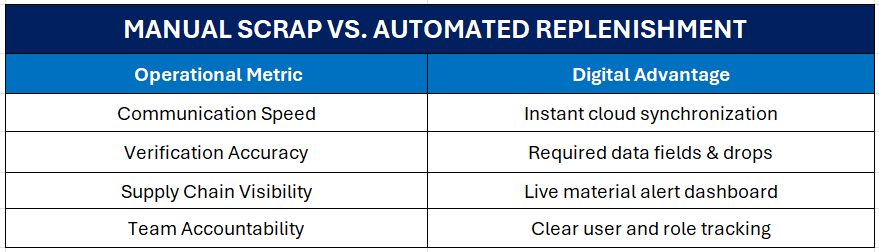
Implementing these interconnected systems forms the core of high-efficiency manufacturing workflow automation. Ditching manual walk-downs and embracing comprehensive manufacturing workflow automation ensures that part orders are filled based on real-time line usage. Operating under structured manufacturing workflow automation keeps production managers completely aware of floor capacities and supply needs, reducing unexpected material delays.
4. Introduce Automated Multi-Department Alerts
Logging a material shortage on a digital screen is only the first step; the data must move instantly to the warehouse team. Plant managers can orchestrate this coordination by relying on a code-free workflow automation tool. Operating via a flexible workflow automation tool connects material handlers, purchasing agents, and station leads within a single cloud-based network. This advanced workflow automation tool automatically routes material requests to the nearest replenishment vehicle based on predefined line locations. Connecting your shop floor with an intelligent workflow automation tool removes administrative lag and speeds up internal supply chains.
When an operator logs a material shortage, the system triggers instant automated email notifications to purchasing and warehouse teams. These automated email notifications eliminate phone tags and clarify exactly which workstation requires a delivery. Setting up automated email notifications ensures that urgent replenishment requests are never lost in a busy supervisor’s inbox, protecting your asset uptime and daily yield targets.
Optimize Your Production Workflows with Checkster
Managing material workflows becomes entirely straightforward when you leverage the right technical tools. At Checkster, our code-free platform provides a powerful form creator that empowers engineering and manufacturing teams to digitize complex records without any programming experience. You can build responsive forms that match your plant's exact assembly floor footprint.
- Frontline Agility: Equip your operators with a mobile productivity checklist app that handles data capture anywhere on the floor.
- Connected Automation: Tie material shortage flags to instant automated email notifications to loop in logistics teams immediately.
- Standardized Tracking: Build robust manufacturing process checklists to maintain quality control across shifts.
Discover how diverse industrial spaces use our software to drive continuous factory excellence by exploring our specialized use cases directory. We provide flexible, clear pricing structures built to scale easily alongside your operational volume. For technical deployment answers or to learn more about our capabilities, browse our comprehensive FAQ section, or contact our team today to schedule a personal live product demonstration.